

1. Start with key entry points
Begin with the areas where people are most likely to approach the property:
- Front doors
- Driveways
- Side gates
- Rear entrances
- Garages
- Outbuildings
The aim is not to record everything, but to capture the most useful activity in the areas that matter most.
2. Cover the front door clearly
A front door camera should show enough detail to identify who is approaching. Ideally, it should capture:
- The doorway area
- Anyone standing near it
- Parcels left outside
- Visitors approaching from the path
The angle should be practical rather than overly wide.
Common Mistake
A camera placed too high may show the top of someone’s head rather than their face. Clear detail is more useful than simply covering a large area.
3. Plan driveway coverage
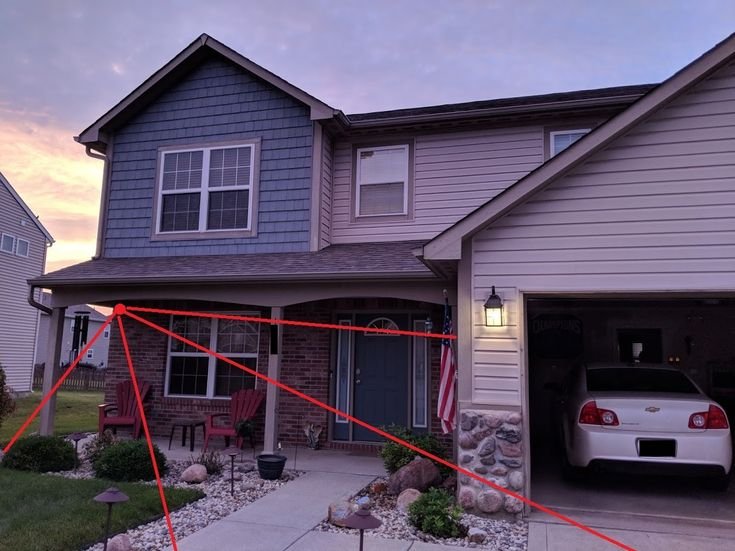
Driveway cameras should be positioned to capture vehicles and people entering or leaving the property.
Useful views may include:
- The drive entrance
- Parked vehicles
- Garage doors
- Footpaths approaching the home
Try to avoid severe glare from headlights or bright sunlight where possible.
4. Do not forget gardens and side access
Rear and side access points are often overlooked. These can be important if they lead to:
- Back doors
- Patio doors
- Side pathways
- Sheds or garden offices
Good coverage here helps reduce blind spots.
5. Think about angle and height
Camera height should balance security and visibility. The camera should be high enough to reduce tampering, but not so high that faces become unclear.
Pro Tip
A well-positioned camera usually captures one important zone clearly rather than trying to cover too much at once. Fewer well-placed cameras are often better than many poorly aimed ones.
6. Avoid common blind spots
Poor placement can leave useful areas uncovered. Common issues include:
- Cameras pointing into strong light
- Cameras installed too far from the target area
- Overlapping coverage while another area is missed
- Ignoring side paths or rear entrances
- Poor night-time visibility
Planning the view before installation helps avoid these mistakes.
7. When professional installation helps
Professional help is useful when:
- You are not sure how many cameras are needed
- You want remote viewing on your phone
- Outdoor cabling needs to be neat and secure
- You need to compare wired and wireless systems
- You want to minimise blind spot
If you are thinking you need “CCTV installation near me” than this is something we can help with. While many people do not think they need CCTV we have found it increases the piece of mind of leaving your house or car outside knowing you can not only always checkup on them but have footage if the worst does come true.
Some common CCTV Brands
Below is a quick fire list of some common CCTV brands you can shop at. We are not partnered with or associated with any of the below, just some big names.
- UniFi Physical Security – Ubiquiti
- Hikvision UK & Ireland – Leading the future of AIoT
- Reolink Cameras & Systems for Home Security- Reolink UK
If you still want to look at more information, check out our page here CCTV Installations – DNGR Tech IT Solutions it can show what we can do for you.